How Does a Mortgage Work for a First-Time Home Buyer?


A mortgage lets you buy a home without paying the full price at once. Here is how a mortgage works for a first-time home buyer — what you pay, what a lender reviews, and what can change between preapproval and closing.
A mortgage lets you buy a home without paying the full purchase price at once. If you are asking, how does a mortgage work for a first-time home buyer, the short answer is this: you pay some money upfront, borrow the rest from a lender, and repay that loan over time with interest. The home secures the loan, meaning the lender has legal rights in the property if the loan is not repaid.
I will break down what that means in practical terms: what you pay, what a lender reviews, and what can change between preapproval and closing.
How A Mortgage Turns A Home Price Into A Loan
A mortgage is a secured loan. You borrow money to purchase a property, and the property acts as collateral. The Consumer Financial Protection Bureau explains that a mortgage is secured by the home, while the down payment and even the definition of a first-time buyer can vary by program. Review the CFPB's mortgage key terms and first-time buyer guidance before assuming you qualify for a particular program.
The Basic Purchase Math
The purchase price is not the same as your mortgage amount. Your down payment reduces the amount borrowed.
Example: If a home costs $350,000 and you make a $35,000 down payment, the starting loan amount is generally $315,000, before any financed costs that may apply to a specific loan.
Your loan amount, interest rate, and repayment term work together to determine the principal-and-interest portion of your payment. A common 30-year mortgage has 360 scheduled monthly payments. As The Mortgage Reports explains in its mortgage basics guide, the rate, down payment, loan amount, and loan term all affect what you pay each month and over the full loan life.
Principal, Interest, And Amortization
Each required mortgage payment usually has two core loan parts: Principal is the amount that reduces what you owe, and Interest is the lender's charge for lending you money.
With a fully amortizing mortgage, the payment schedule is designed to bring the balance to zero by the end of the term, assuming every payment is made as scheduled. Early in the loan, more of each payment usually goes to interest because the balance is highest then. Later, more goes toward principal.
Morgan Stanley at Work notes that mortgage payments generally allocate funds to interest and principal, with the principal share increasing over time. Its overview of mortgage amortization helps show why home equity often builds slowly at first.
That matters when you are thinking about selling or refinancing within a few years. A payment can feel substantial while the principal balance falls more gradually than expected. Extra principal payments may shorten repayment or reduce interest, but first confirm that your loan has no restrictions and that you still have enough emergency savings.
Why Loan-To-Value Ratio Matters
Your loan-to-value ratio, or LTV, compares the loan amount with the property's value. In the $350,000 example above, a $315,000 loan equals 90% LTV.
LTV helps lenders assess risk. A lower LTV can mean a smaller loan relative to the home value, which may affect approval options, pricing, and whether mortgage insurance is required. For certain conventional loans, PMI, or Private Mortgage Insurance, can increase the monthly payment when the down payment is smaller. Program rules differ, so do not assume one down payment percentage works the same way everywhere.
Low-down-payment financing can be a sensible choice when keeping cash reserves protects you from moving costs, repairs, or income disruption. The tradeoff is straightforward: you borrow more, may pay mortgage insurance, and can pay more interest over time. The best choice is not always the largest down payment. It is the option that leaves the household stable after closing.
How To Budget For The Full Cost Of Owning A Home
The most common affordability mistake is focusing only on the advertised home price or the principal-and-interest payment. Your full monthly housing cost can be meaningfully higher.
Separate The Mortgage Payment From The Monthly Housing Cost
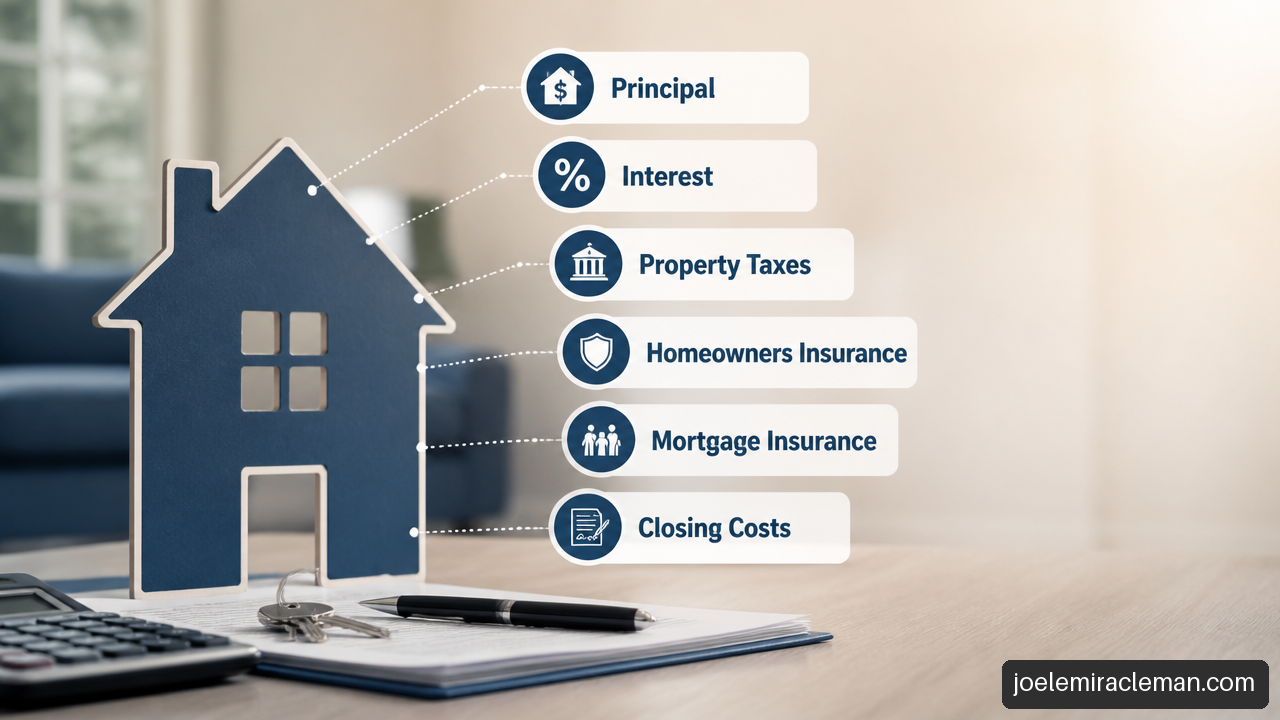
A lender may collect several costs through escrow, an account used to pay certain property bills when they come due. Your monthly payment could include the following:
| Cost | What It Covers | Why It Changes Your Budget |
|---|---|---|
| Principal and interest | Loan repayment | Depends on loan amount, rate, and term |
| Property taxes | Local property tax obligation | Can change after reassessment or local tax changes |
| Homeowners insurance | Protection for covered property losses | Premiums can rise or differ by location and coverage |
| Mortgage insurance | Protection required by some loan programs | Adds cost when required by the loan structure |
| HOA dues | Community or condominium association fees | Usually paid separately from the lender payment |
Utilities, maintenance, repairs, furnishings, and commuting costs also matter, even though they are not part of the mortgage. A house that technically fits the loan approval may still strain your monthly cash flow after these expenses are included.
Use a mortgage payment calculator to estimate principal and interest, then add realistic estimates for taxes, insurance, mortgage insurance, and HOA dues. Treat the result as a planning tool, not a final lender quote.
Down Payment Versus Cash To Close
Your down payment is only one part of the cash needed to buy. Cash to close is the amount you need to bring or send for closing after accounting for your down payment, closing costs, deposits, seller credits, lender credits, and prepaid items.
A buyer might have a $20,000 down payment but need a different cash-to-close amount because of appraisal fees, title services, prepaid insurance, initial escrow funding, or credits negotiated in the contract. Earnest money already paid is typically credited toward what you owe at closing, but it is still money you needed earlier in the process.
A practical way to plan is to separate your funds into three buckets:
- 1Purchase funds for the down payment and closing costs.
- 2Move-in funds for movers, utility setup, immediate repairs, and basic furnishings.
- 3Reserve funds for unexpected costs after you receive the keys.
Fair warning: spending every available dollar at closing can make a new home feel risky instead of exciting. A low-down-payment option may be worth considering if it preserves a reasonable reserve, even if it costs more over time.
Compare Loan Types By Fit, Not By Label
Conventional, FHA, VA, and USDA loans are not interchangeable. Each has different eligibility rules, property standards, costs, and underwriting requirements.
| Loan Type | May Fit When | Watch Closely |
|---|---|---|
| Conventional | You have solid credit, stable finances, or want flexible property options | PMI and pricing can vary with LTV and borrower profile |
| FHA | You need a program with more flexible qualifying features | Mortgage insurance and property condition requirements |
| VA | You are an eligible veteran, service member, or qualifying surviving spouse | Eligibility, funding costs, and lender overlays |
| USDA | You meet household and property eligibility rules in an eligible area | Location and income requirements |
VA and USDA financing may allow eligible borrowers to buy with no down payment, but eligibility and costs depend on the program and borrower. Do not choose a program solely because the upfront down payment is lower. Compare the complete payment, cash needed, and likely time you expect to own the home. If you have served, our VA loan guide for veterans breaks down eligibility, the funding fee, and zero-down rules.
Also, 'first-time buyer' is not one universal federal status. Some programs use a three-year no-ownership test, while others use different rules or do not require first-time status at all. Check the specific program rather than relying on the label.
How The Mortgage Process Moves From Preapproval To Closing
A mortgage approval is not one moment. It is a series of reviews, and each review answers a different question: Can you likely qualify? Is this home acceptable collateral? Have the loan conditions been met?
Prequalification, Preapproval, And Final Approval
These terms sound similar, but they carry different weight.
| Stage | What Happens | What It Does Not Guarantee |
|---|---|---|
| Prequalification | A rough estimate based on information you provide | That documents, credit, and property details will qualify |
| Preapproval | A lender reviews more detailed financial information and issues a preliminary written decision | Final approval or an approved appraisal |
| Underwriting approval | The lender verifies documents, property information, and conditions | That nothing can change before closing |
Bankrate explains that mortgage preapproval is preliminary and lender offers should be compared. A preapproval can help set a shopping range and support an offer, but it is not a promise that every home, every appraisal, and every later financial change will work.
A stronger offer starts with realistic numbers, not the highest possible approval amount. Before shopping, consider 7 true steps to buying your first home so your financing plan, savings plan, and home search are working together.
What Underwriting Checks
During underwriting, the lender typically verifies the story told by your application. That includes income, assets, debts, credit history, employment, and details about the property. You may be asked for pay stubs, tax documents, bank statements, explanations for large deposits, and documents related to your purchase contract.
The appraisal is separate from the inspection. An inspection helps you understand the property's condition. An appraisal helps the lender evaluate value for lending purposes.
If an appraisal comes in below the contract price, the lender may base its loan amount on the lower value. Then the buyer and seller may renegotiate, the buyer may bring more cash, or the contract may end if a contingency allows it. For example, a buyer offering $350,000 may face a different financing calculation if the appraisal supports only $335,000.
Avoidable Delays And How To Prevent Them
Some delays are outside your control, such as title issues or appraisal timing. Others can be reduced with careful planning.
- 1Do not open new credit accounts or finance a car before closing unless your lender confirms the impact first.
- 2Avoid moving money between accounts without a clear paper trail. Large deposits may need documentation showing where the money came from.
- 3Keep employment and income stable where possible. A job change, reduced hours, or shift to commission income can require additional review.
- 4Respond to document requests quickly and completely. Sending only part of a bank statement can create another round of questions.
- 5Keep making every payment on time. New late payments or credit changes can affect final review.
- 6Review your loan disclosures. The Loan Estimate helps you compare projected terms and costs early. The Closing Disclosure shows final terms and closing costs before consummation.
When comparing offers, request comparable scenarios: the same loan amount, loan type, term, rate structure, and estimated closing date. Then compare rate, points, lender credits, APR, monthly payment, and the estimated cost of borrowing over the period you expect to keep the loan. A low rate with expensive points may not be the best deal if you plan to move or refinance soon.
For more ways to protect your budget and timeline, review these first-time buyer mistakes to avoid. The goal is not to avoid every surprise. It is to avoid surprises that could have been planned for.
Key Takeaways
- A mortgage is a home-secured loan. You make a down payment, borrow the remaining amount, and repay principal plus interest over time.
- Your monthly housing cost is more than principal and interest. Include taxes, insurance, mortgage insurance when required, HOA dues, utilities, and maintenance.
- Cash to close is not the same as the down payment. It can include closing costs, prepaid items, escrow funding, and adjustments for credits or deposits.
- A lower down payment can preserve savings but may increase your loan balance, interest cost, and mortgage insurance expense.
- Preapproval helps you shop and make offers, but underwriting, appraisal, title work, and financial changes can still affect final approval.
- Compare lenders using the same loan scenario. Rate alone does not show the full cost.
Frequently Asked Questions
How Much Money Do I Need Upfront To Buy My First Home?
You need more than the down payment. Plan for earnest money, closing costs, prepaid insurance or taxes, moving expenses, and a reserve for early repairs. The exact amount depends on the loan, property, location, seller credits, and timing. Ask for a detailed estimate based on the homes and loan programs you are considering.
What Credit Score And Debt-To-Income Ratio Do I Need?
There is no single nationwide minimum that applies to every buyer. Requirements vary by loan program, lender, property, and the overall strength of your application. Debt-to-income ratio, or DTI, compares monthly debt obligations with gross monthly income. A lender reviews DTI alongside credit, savings, income stability, and the proposed housing payment.
Is A 15-Year Or 30-Year Mortgage Better For A First-Time Buyer?
A 15-year loan often has a higher monthly principal-and-interest payment but may reduce total interest and build equity faster. A 30-year loan generally has a lower required payment and can provide more budget flexibility. Choose the shorter term only if the higher payment still leaves room for savings, repairs, and other goals.
Should I Choose A Fixed-Rate Or Adjustable-Rate Mortgage?
A fixed-rate mortgage keeps the contractual interest rate constant for the agreed term, although escrowed taxes and insurance can still change the total payment. An adjustable-rate mortgage may start with a lower rate but can change later under its contract rules. A fixed rate may fit buyers who value predictability; an adjustable rate may deserve consideration only after you understand the adjustment schedule, caps, and payment risk.
What Happens If The Appraisal Is Lower Than My Offer Price?
The lender may calculate the maximum loan based on the lower appraised value. You may be able to renegotiate the price, increase your cash contribution, challenge the appraisal through available lender procedures, or use a contract contingency if applicable. The right option depends on your budget and whether the home still makes sense at the agreed price.
Can A Mortgage Be Denied After Preapproval?
Yes. Preapproval is preliminary. Final approval can change if documents do not support the application, credit or debt changes, income changes, the appraisal is insufficient, title issues arise, or loan conditions are not met. Keep finances steady and communicate with your lender before making major financial moves.
How Do I Compare Mortgage Offers Fairly?
Compare written estimates for the same loan amount, product, term, and expected closing date. Review the interest rate, points, lender credits, APR, projected principal-and-interest payment, mortgage insurance, cash to close, and estimated five-year borrowing cost. If one offer looks much cheaper, ask what assumption makes it different.
Sources
- 1Consumer Financial Protection Bureau, Mortgage Key Terms: https://www.consumerfinance.gov/consumer-tools/mortgages/answers/key-terms/
- 2Bankrate, First-Time Homebuyer Guide: https://www.bankrate.com/mortgages/first-time-homebuyer-guide/
- 3The Mortgage Reports, What Is a Mortgage? Basics for First-Time Home Buyers: https://themortgagereports.com/19098/what-is-a-mortgage-and-how-does-it-work
- 4Morgan Stanley at Work, Mortgages 101: https://www.morganstanley.com/atwork/employees/learning-center/articles/mortgages-101
Ready to take the first step? Get your DIAMOND Approval with Joseph Le today.
Apply Now