Mortgage Payoff With Extra Payments: What Changes Over Time

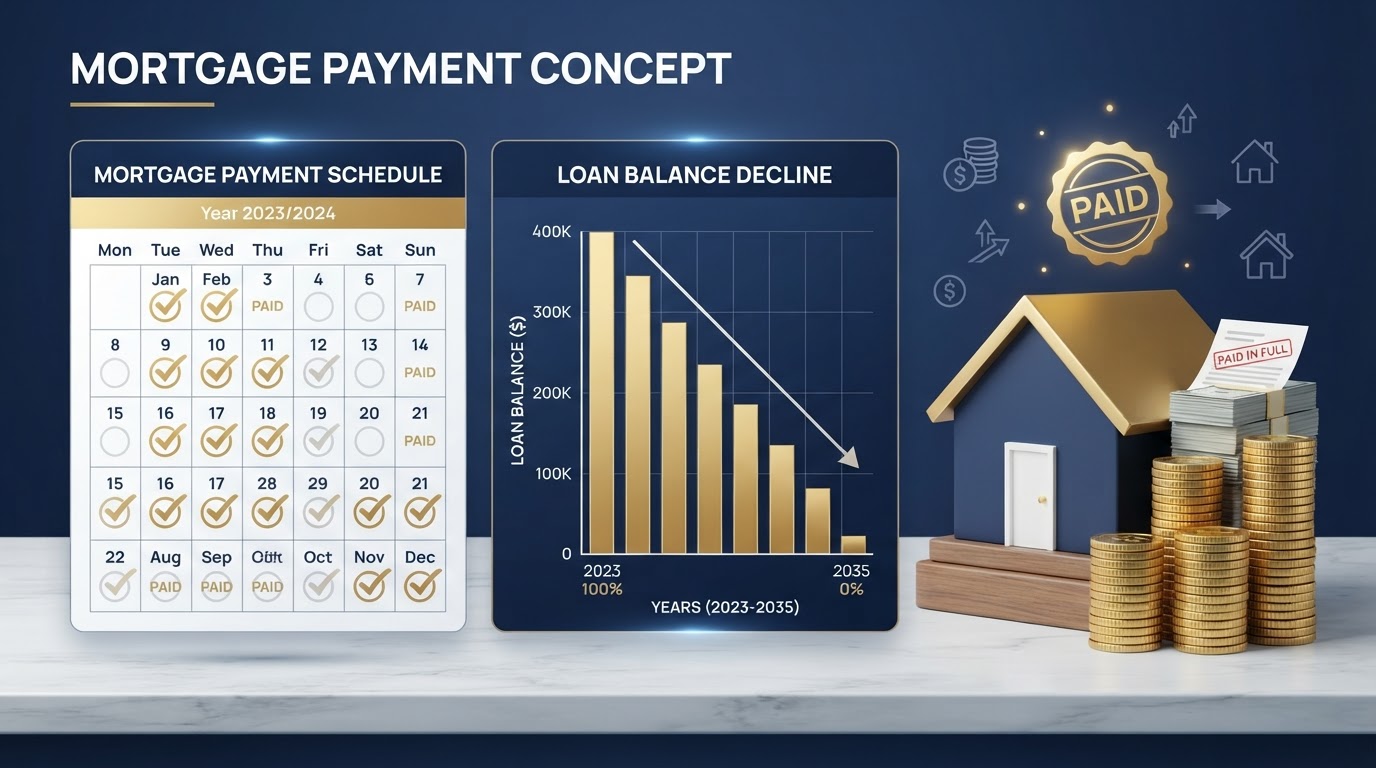
Mortgage payoff with extra payments comes down to your principal, the interest charged on the remaining balance, and how long you keep making extra payments. Learn how to compare your current schedule with an extra-payment plan and decide whether the faster payoff fits your bigger financial picture.
Mortgage Payoff With Extra Payments: What Changes Over Time comes down to three things: your mortgage principal, the interest charged on the remaining balance, and how long you keep making extra payments. We'll show you how to compare your current schedule with an extra-payment plan, and how to decide whether the faster payoff fits your bigger financial picture.
Key Takeaways
- Extra principal reduces future interest. The sooner it lowers your remaining loan balance, the sooner later interest calculations use a smaller balance.
- Extra payments usually shorten the loan. They do not automatically lower your required monthly principal-and-interest payment.
- Use today's loan details. Start with your current balance, rate, and remaining term, not the original loan amount and term.
- Compare the right numbers. Look at the projected payoff date, total interest paid, and remaining balance at milestones.
- Payment timing matters. A lump sum applied earlier can save more future interest than the same amount applied later.
- Keep cash accessible. Build savings and cover higher-priority obligations before putting money into home equity.
How amortization changes as the balance falls
With a fixed-rate mortgage, each scheduled payment first covers the interest charged on your outstanding balance. Whatever remains goes toward principal, the amount you still owe on the loan.
Early in the mortgage, that balance is high, so more of the scheduled payment goes to interest. As the balance falls, the interest portion shrinks and more of each scheduled payment reduces principal. That changing split is amortization.
An extra principal payment lowers the balance as soon as the servicer applies it. Later interest is then calculated on a smaller amount, and the loan pays down faster than it would on the original schedule.
The Amortization Schedule is useful for seeing how scheduled payments divide between principal and interest over a loan's life. Follow the balance as well as the payment split: extra principal changes the path of that balance, but it generally shortens the loan instead of recalculating the required monthly payment.
Compare the original schedule with an extra-payment plan
To estimate how much extra payments could change your payoff timeline, begin with your current balance, interest rate, and remaining term. The original loan amount and term no longer describe where your mortgage stands today.
Build a baseline schedule using those current details. Then compare it with a second schedule that adds your planned principal amount, keeping the regular principal-and-interest payment and other assumptions the same. A dedicated Amortization Schedule calculator shows how regular payments split between principal and interest and how the balance declines over time, making it a practical starting point for the baseline.
For the extra-payment version, use a spreadsheet or a mortgage calculator with extra payments that lets you account for the added principal and its timing. Compare these three results:
- Projected payoff date: How much sooner the balance reaches zero.
- Total interest paid: The difference in interest between the baseline and extra-payment schedules.
- Remaining balance at milestones: How quickly you build equity at dates that matter to you.
Keep the comparison focused on principal and interest. A full monthly housing payment may also include property taxes, homeowners insurance, and HOA charges. Those costs do not reduce mortgage principal; escrow is an account used to collect and pay certain housing costs, not part of the loan balance. The Mortgage Payment calculator estimates principal, interest, taxes, and insurance, which helps separate the loan payment from the rest of your housing bill.
A calculator gives you an estimate, not a guaranteed payoff amount or date. Payment posting dates, accrued interest, fees, and your servicer's rules can change the amount needed to clear the loan on a specific day.
Did You Know?
MSR valuations would fall by around 4% for each one percentage point increase in the prepayment rate.
Source: Federal Reserve
Choose a payment pattern you can sustain
A fixed monthly extra principal amount is easy to model and can steadily reduce your balance. Pick an amount you can keep paying through changing expenses; a plan that strains your budget is a plan that may not last.
A genuine biweekly mortgage payment schedule means making 26 half-payments in a year, which equals 13 full monthly payments. The result depends on how the servicer receives and applies the funds, so find out whether it holds partial payments or credits them as they arrive.
A lump-sum payment reduces principal when it is applied. If you receive cash you can commit to the loan, applying it sooner generally saves more future interest than waiting to make the same payment later.
If you plan to make two or four extra-payment equivalents a year, convert that plan into an annual extra principal amount. Include the amount and intended timing in your comparison, since payment arrangements can treat funds differently. The outcome depends on your balance, rate, and remaining term.
In a 30-year, $325,000 loan example, paying $100 more a month starting in the fifth year saves $34,184 in interest and shortens the payoff by two years and seven months, according to AARP. It is an illustration of one loan scenario, not a forecast for every borrower.
Source: AARP
Account for timing, rate changes, and payment posting
Model when extra payments actually start and how long they continue. Starting sooner and keeping the plan going usually reduces more future interest than starting later or stopping early, because the lower balance has more time to affect later interest calculations.
An adjustable-rate mortgage needs a different kind of estimate. When the rate resets, the interest charged can change, so a schedule that holds today's rate constant becomes less reliable beyond the current rate period.
Payment posting dates matter because they affect the balance used for the next interest calculation. A monthly calculator may assume a regular payment date, while your servicer calculates from actual posted payments and accrued interest.
A biweekly payment arrangement differs from making principal-only payments. Ask how partial payments are handled, whether the additional amount is credited to principal, and when that credit takes effect. Then compare your account activity with the schedule you expected.
Distinguish principal payments from a recast or refinance
A principal-only payment reduces the balance and can move your payoff date closer. It does not, by itself, recalculate the required monthly payment, so keep budgeting for the scheduled amount.
A mortgage recast uses a lower balance to recalculate the required payment over the remaining term. It can reduce the required payment without replacing the loan, while extra payments alone typically leave the scheduled payment unchanged.
A mortgage refinance replaces your existing loan with a new one. Compare the new rate, term, closing costs, and total interest, not just the new monthly payment. A lower payment can come from stretching repayment over more time, which may increase the total cost.
Compare extra payments, a recast, and a refinance using the same remaining balance and a realistic time horizon. Include transaction costs and any prepayment terms in the comparison. For a refinance, the refinance break-even calculator can help you assess how long it takes monthly savings to cover closing costs.
Did You Know?
The average annual prepayment rate would rise by around 5 percentage points for the typical servicing portfolio.
Source: Federal Reserve
Weigh the payoff benefit against other uses of cash
Before you send extra money to your mortgage, keep adequate emergency savings and cover near-term obligations. Home equity can build as your balance falls, but it is less accessible than cash in a savings account.
Compare extra mortgage payments with higher-interest debt and any employer retirement match available to you. Paying down costly debt or receiving a match may provide a stronger financial benefit than reducing a lower-rate mortgage balance.
Also compare the interest you would avoid with potential investment returns and the effect of mortgage-interest tax treatment. Investment returns are uncertain, and the tax benefit depends on your situation, so use personal assumptions instead of treating either choice as an automatic win.
Finally, review your loan terms for a prepayment penalty or payment-processing fees. Either cost can reduce the value of an extra principal payment, so include it in your calculation before committing the cash.
Frequently Asked Questions
What happens to my 30-year mortgage if I make two extra payments each year?
If both additional payments are credited to principal, they reduce the balance beyond the scheduled payment path. To compare plans fairly, calculate the annual extra principal you intend to pay and specify when those payments will be applied.
What happens if I pay four extra mortgage payments a year?
The result depends on what you mean by an extra payment and how your servicer applies it. Write down the extra principal amount for the year and the planned payment dates, then compare those figures with your regular schedule.
What happens if I pay extra each month on my 30-year mortgage?
Your required monthly payment usually stays the same, while extra principal can bring the payoff date forward.
What is the 2% rule for mortgage payoff?
There is no universal mortgage-payoff 2% rule that sets a required payment or guarantees a particular payoff date. If someone uses the phrase as a personal target for extra annual principal, define whether the 2% applies to the original balance or the current balance before comparing the plan.
How can I tell whether an extra payment was applied to principal?
Review your transaction history or monthly statement and compare the posted principal reduction with the scheduled principal amount for that payment period. If the extra funds appear as unapplied, suspense, or future-payment credit instead, contact the servicer and ask how to have them credited to principal.
Conclusion
Mortgage Payoff With Extra Payments: What Changes Over Time is easiest to understand when you compare your current schedule with a clear extra-principal plan. Track the payoff date, total interest paid, and remaining balance, then weigh those gains against cash reserves, other debt, and the costs of changing your loan.
Choose an amount and timing you can sustain, and make sure extra funds are credited to principal. A perfect plan on paper is worth nothing if it leaves you short on cash or never gets applied the way you intended.
Ready to model your payoff timeline? Get your DIAMOND Approval with Joseph Le today.
Get Pre-Approved